STORIES OF A WORKFORCE
Celebrating the Centennial of the Houston Ship Channel



Photographs and Video by Houston Arts Alliance
Production by Jonathan King
July 8, 2015
Stories of a Workforce: Celebrating the Centennial of the Houston Ship Channel is an exhibition that was mounted for the 100th anniversary of the official opening of the Houston Ship Channel. It was housed in the marvelous gallery in the beautiful and historic Julia Ideson Building, the city's first public library, from September 1, 2014 to January 31, 2015. Then as now, the exhibition is an effort to make the Port of Houston better seen, better known and, especially, better heard. In relying on the voices of the men and women who work there, Stories of a Workforce sought out the greatest ground-level experts — the workers themselves — to tell us their stories, to recount their experiences, and to share their recollections regarding an occupational setting that has been, like many other American workplaces, drastically transformed over the last several decades.
The content of the exhibition has largely been drawn from interviews conducted in the last three years with more than fifty individuals working in a wide range of occupations associated with the Houston Ship Channel — from ship to shore, from blue collar to white, from the docks to the board rooms. Thus, the exhibition is not a history but rather a group portrait of life and work on the Port over the last fifty or so years. Stories of a Workforce commemorates the centennial of the Ship Channel by sharing and amplifying these combined voices and their enduring insights.
Stories of a Workforce literally allows us to listen to the memories of these working people. And in their descriptions of work life, we found many surprising commonalities. In their words, the Ship Channel workforce repeatedly discussed their connections to community, relayed accounts of family tradition, stressed the importance of new knowledge and old know-how in the workplace, and reported the struggles they have seen on the job and the transformations they have all experienced as workers. In a sense, Stories of a Workforce is something of a collective autobiography of the Ship Channel from the very workers that this project had the honor to document.
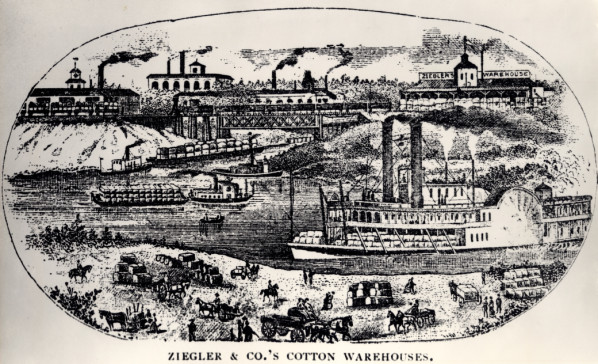
On August 30, 1836, the city of Houston was established when two entrepreneurial brothers from New York, Augustus Chapman Allen and John Kirby Allen, ran an advertisement in the Telegraph and Texas Register for the "Town of Houston". The town, which featured a mixture of timber and grassland, lay on the level Coastal Plain. The brothers claimed that the town would become "the great interior commercial emporium of Texas", that ships from New York and New Orleans could sail up Buffalo Bayou to its door.
In 1914, this dream was fully realized when state and federal authorities officially opened the Port of Houston and the Houston Ship Channel. Today, the Port of Houston is the main port in the state of Texas and the world's tenth largest port. The growth of the Port of Houston during its first century has been incomparable, and the Houston Ship Channel is a testimony to the hard work and perseverance of its founding fathers and the diligence of its workforce. Now, one of the busiest waterways in the United States, the Houston Ship Channel has truly achieved its early promise to become the preeminent link between Texas and the sea.
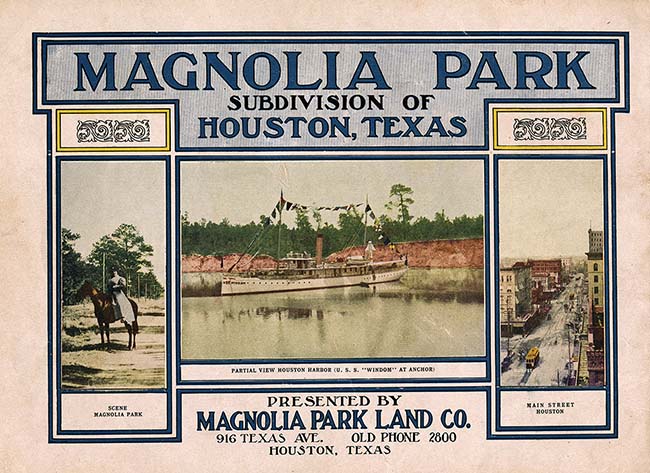
Although it is known around the world as the Port of Houston, the urban complex that lines the Ship Channel represents a constellation of communities with separate identities, roles and histories. These communities are home to workers of all kinds who make their living in trades and industries associated with the Port. The impact of the Ship Channel's growth on these communities has been varied — often creating and sustaining some as thriving neighborhoods, or providing new opportunities to their historically marginalized residents, but sometimes diminishing others through industrialization. Whatever their fortunes, these communities have figured strongly in the life of the Port and the words of its workers.


At the Port of Houston and along the Houston Ship Channel, for all of their one hundred years, knowing how to get the job done—whatever the job—has always been the priority. Over time, however, the knowledge and skills associated with the many jobs that make up a working port have been transformed. The introduction of automation, containerization and technology have drastically altered both the workplace and what it takes to do the work. Nevertheless, even in the face of change and modernization, the age-old practices of peer-to-peer learning and the development of local knowledge remain as important today as the newer kinds of training that a worker acquires in a classroom or at a computer terminal.
Many men and women who have worked the Ship Channel since the 1960s depict the struggles of their era as reflections of widespread socioeconomic change. Unions, African-American and Mexican-American workers, women who were entering the workplace for the first time — all believed, with justification, that social parity and middle class prosperity could be the dream of the many and not just the few. The Port and the Ship Channel shared these experiences with much of the rest of the United States.
In the past fifty years, the American workplace has been dramatically altered by mechanization, technology and pressing social issues. The Port of Houston and the Houston Ship Channel are no exception; in fact, they are an amazing demonstration of how innovation has transformed the nature and quality of work there, reduced the number of people and the time necessary to accomplish that work, and reshaped the kinds of knowledge that must be deployed to perform it. Ship Channel workers, young and old, now accept change as inevitable, yet continue to appreciate the resourcefulness and rigor of earlier workers who faced the same challenging tasks with simpler tools...
Lorem ipsum dolor sit amet, consectetur adipiscing elit. Etiam at urna interdum, vestibulum neque at, fermentum eros.